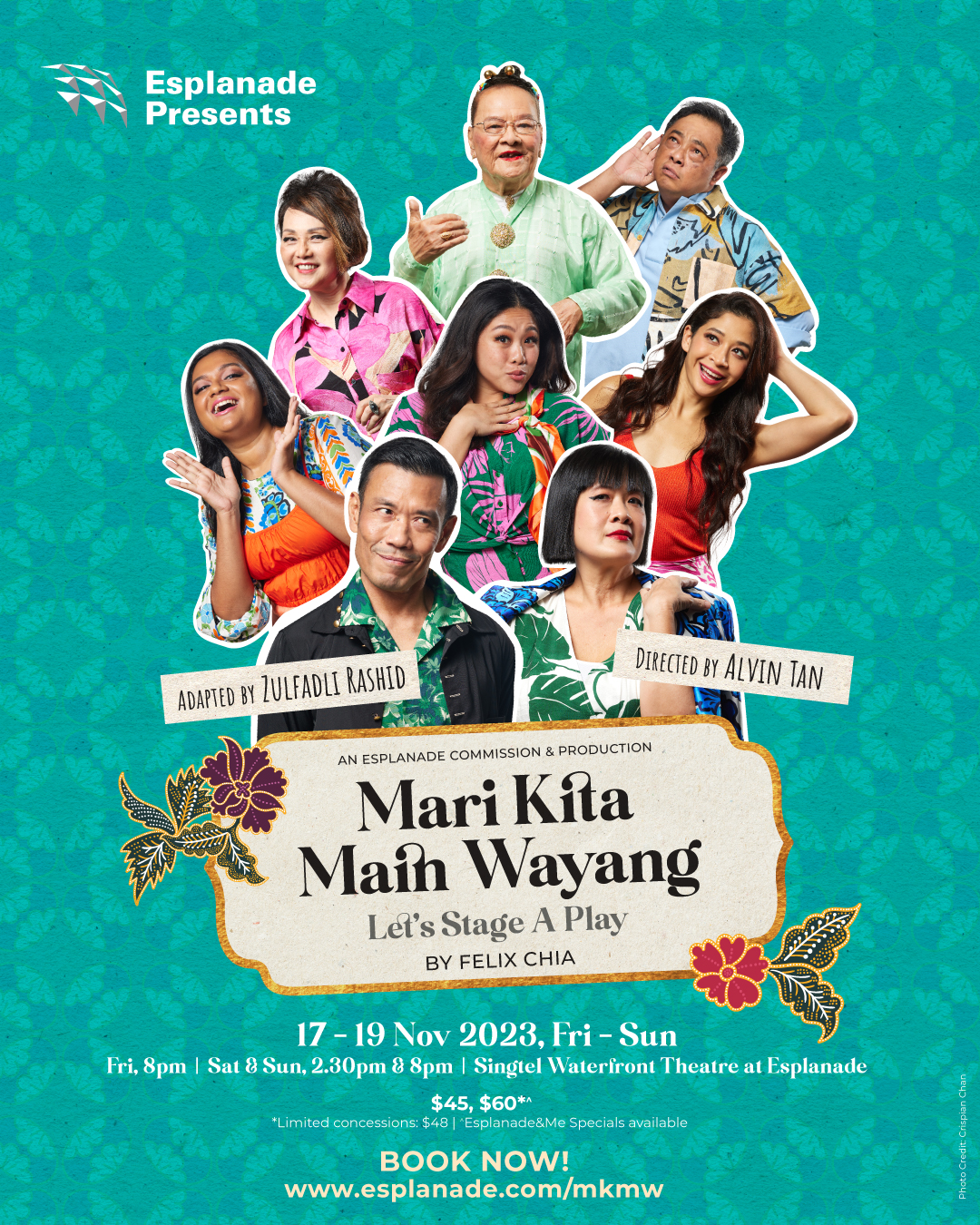
21st Baba Nyonya Convention 2008, Malacca, Friday 5- Sunday 7 December 2008, "Towards Greater Awareness of our Baba Nyonya Heritage" Convention Price @ S$380.00 per person, Staying @ the Hotel Equatorial (2N/ twin sharing) Register with our Hon.Secretary, Mrs.Lim Geok Huay at Tel: 6255-0704 Download the registration form here.
00. Baba Convention 2008- Melaka
21st BABA NYONYA CONVENTION 2008 in MELAKA
5 - 7 December, 2008
Important Note
1. Cost of hiring coaches are subject to changes 2. Super peak period at this time of the Convention –
Deadline to book with us by: 30 Oct 08
The Package cost: S$380 (twin-sharing) and S$538 (single) includes:- 1. Return trip via air-conditioned coach. Transfer to Malaysian Coach at Tuas Link to Melaka 2. Accomodation (twin sharing) at Hotel Equatorial Melaka inclusive of Breakfast 3. Convention dinner at the Melaka Ballroom, Hotel Melaka on Friday, 5 Dec 2008 4. Convention Seminar with Tea and Lunch 5. Half-day city tour 1. Convention dinner at Pool Side, Hotel Equatorial on Saturday, 6 Dec. 2008 2. Farwell Lunch on Sunday, 7 Dec 2008.
00. Matriarchs, Goddesses and the Blessed Virgin by MARTIN LOH
The artist Martin Loh has never been drawn to women considered conventionally beautiful. But in this new solo exhibition, he has taken inspiration from strong, iconic ladies he has encountered in his environment. The Peranakan matriarch is a familiar figure in his art, but he now introduces other female images worthy of worship. Several Peranakan families are also Catholic, so Martin is quite cognizant of the Virgin Mary, but at the same time, he lives and works amidst a very Chinese culture so is also familiar with the Buddhist/Taoist Goddess of Mercy, Kuan-Yin, and the Taoist Goddess of the Sea, Ma-Tsu. Depiction of these religious icons hardly points to the artist coming to terms with his creator. He merely revels in his fascination for these dominant women, for he allows them to dominate his canvases as well.
157 Neil Road, is perhaps one of the last surviving Peranakan-style house in its original state in Singapore. It is cited and celebrated today as being a significantly outstanding feature of Singapore’s rich architectural heritage. Due to open in September 2008, the Baba House will play an important role in conserving the distinctive Peranakan heritage, as well as preserving the memory of a Tun Tan Cheng Lock, a highly respected Peranakan community leader.
Visitors will be able to appreciate the restoration and conservation efforts made on this authentic Peranakan structure and will at the same time be exposed to the customs and material culture of the Peranakan community in a living context.
Exhibitions and events held in this house will showcase fascinating aspects of Peranakan heritage which will be captured in an eclectic mix of antiques, decorative ornaments, Peranakan cuisine, social customs and lifestyle.
150 members of the clan are meeting to mark 210th birth anniversary of philanthropist By Serene Luo
SOMEWHERE in London, you might encounter a strapping police sergeant with ginger hair and clear blue eyes - nothing unusual, till you ask for his name. Mr Lawrence Tan Xu Wen, 39, never fails to raise eyebrows when he says it. He would have you know that his ancestor was philanthropist Tan Tock Seng, 'a famous founder of Singapore, my dad told me'.
Mr Tan, a sixth-generation descendant, is among 150 members of the Tan clan who have gathered in Singapore to mark the 210th year of Tan Tock Seng's birth.
Yesterday, 30 of them presented a copy of the Tan family tree to the Peranakan Museum in Armenian Street. The document - with 1,368 names running in a scroll almost 19m long - is the result of research into the family's genealogy done mainly by Mr Lawrence Tan and Mr Roney Tan, a Singaporean.
More precisely, P is for Peranakan and Puteh, the character in a new series of children's books written by a mother of three By Benita Aw Yeong
It was the threat of forgetting that inspired author Adeline Foo to begin remembering. The 37-year-old civil servant by day and author on weekends began writing her new children's series, The Story Of Puteh, when her father was diagnosed with Alzheimer's disease late last year.
The series is about the adventures of a girl named Puteh (which means white in Malay). Puteh was the nickname of Foo's grandmother, who loved to put rice powder on her face which gave her a creamy white complexion.
Two books in the four-part series, The Beaded Slippers and The Kitchen God, are already in the bookshops.
The series began when Foo, the daughter of a Peranakan father and a Chinese mother, browsed through back copies of the Peranakan Association's newsletters at the library.
Pathmavali Rengayah believes in taking short cuts, but still serves tasty dishes, such as chilli prawns with fermented beans By Huang Lijie
For all but the most diligent home cook, the deal breaker in a recipe is often its length. Those that read like mini essays seldom make it to the family dinner table.
Housewife Pathmavali Rengayah, 61, admits to succumbing to this weakness, especially when cooking her ethnic cuisine - Peranakan Indian food.
The cuisine is a blend of South Indian and Peranakan Chinese culinary influences. It originates from the Chitty Melaka, a community of South Indian Tamil merchants who settled in Malacca in the 15th century and married the local Malay, Javanese and Batak women, as well as Peranakan Chinese.
Settle down and behave, boys and girls, as Today tells you a tale:
This year’s Singapore InternationalStorytelling Festival kicked off yesterday and runs until Sept 9.
Search
Statistics
Visitors: 278564
Who's Online
We have 1 guest online
Picture Perfect
Kebaya Origins
'Europeans were wearing the lace kebayas 50 to 100 years before the Babas took it on. The Babas were the last to take it on and the last to give it up because they were conservative.' MR PETER LEE
Heritage Matters
'Right now the challenge is to document and create as much information as possible...Without building this body of work, you can't move forward.' MR PETER LEE, on keeping his Peranakan roots alive